







The sticky problem of lunar dust gets a mathematical solution
 2026 年 1 月 2 日
**Apollo Astronauts’ Unseen Enemy on the Moon: The Challenge of Lunar Dust**
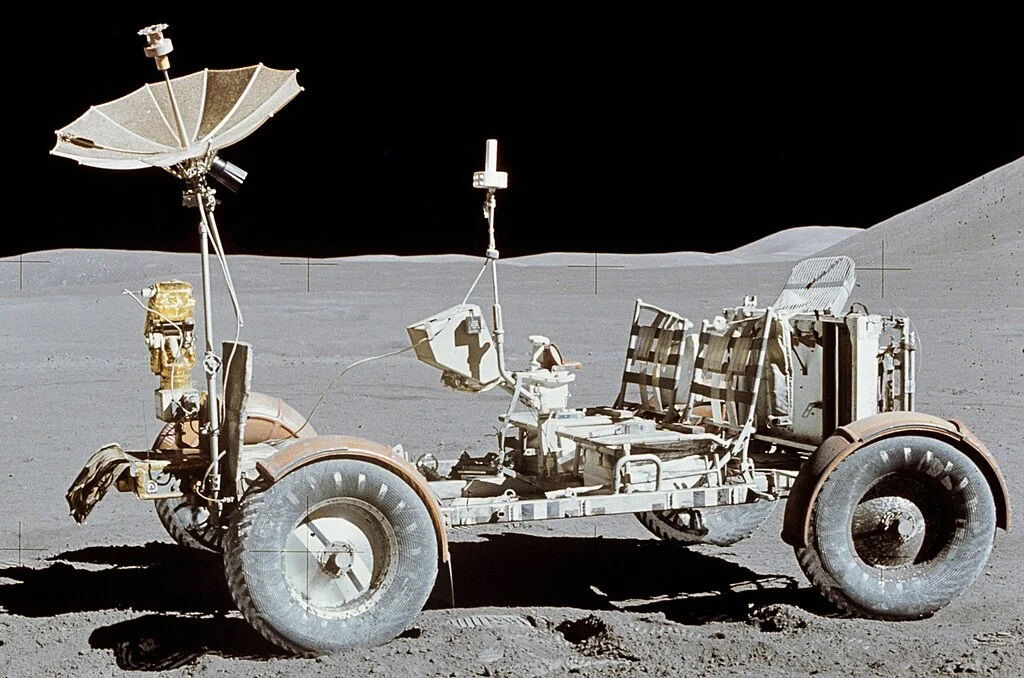
When Apollo astronauts first set foot on the Moon, they encountered an unexpected adversary: fine lunar dust. This dust, kicked up by their movements and attracted by static electricity, coated everything in its path. It infiltrated seals, scratched visors, and clung stubbornly to suits despite vigorous brushing. Eugene Cernan, the last person to walk on the Moon during the Apollo 17 mission, described lunar dust as one of the most aggravating aspects of lunar operations.
More than five decades later, as humanity prepares to return to the Moon with increasingly sophisticated equipment, solving the lunar dust problem has become critical.
—
### Understanding Lunar Dust Charging and Movement
Researchers from the Beijing Institute of Technology, China Academy of Space Technology, and Chinese Academy of Sciences have developed a detailed theoretical model that explains precisely how charged dust particles interact with spacecraft surfaces during low-velocity collisions.
The challenge begins with the Moon’s harsh environment. On the dayside, intense solar ultraviolet and X-ray radiation strip electrons from both spacecraft and the lunar surface, leaving them positively charged. This creates a “photoelectron sheath,” essentially a cloud of electrons hovering above the ground.
Conversely, on the nightside, spacecraft and regolith collect electrons from the surrounding plasma, becoming negatively charged and forming what’s called a “Debye sheath.” Adding another layer of complexity, the solar wind continuously bathes everything in charged particles.
—
### Electrostatic Forces at Play
Within this electrically active environment, dust particles themselves become charged and experience three distinct electrostatic forces as they approach a spacecraft:
– **Electric Field Force:** Acts on the particle’s surface charge, pulling it toward or pushing it away depending on whether their charges are opposite (attraction) or the same (repulsion).
– **Dielectrophoretic Force:** Arises because the dust particle distorts the non-uniform electric field around it, attracting the particle toward regions of stronger field regardless of its charge.
– **Image Force:** Occurs when the approaching charged particle induces an opposite charge in the spacecraft’s conductive surface, creating an additional attractive pull—similar to how a balloon sticks to a wall.
These forces intricately govern how dust behaves near spacecraft surfaces before physical contact.
—
### What Happens on Contact?
The model also recognizes that once a dust grain physically strikes a spacecraft coating, other forces come into play. Adhesive van der Waals forces—molecular attractions between surfaces—dominate, especially during the slow velocity impacts typical of lunar operations.
The collision unfolds in three stages:
1. **Adhesive Elastic Loading:** The particle compresses against the coating, strengthening the adhesion forces between surfaces.
2. **Material Deformation:** If the impact has enough energy, the coating begins to deform and dissipate energy as the material yields.
3. **Unloading Stage:** The particle either bounces away or remains stuck, depending on whether the collision velocity falls within a critical range.
—
### Practical Insights from the Model
This new theoretical model offers several valuable insights for designing lunar missions:
– **Coating Properties Matter:** Dielectric coatings that are thick and have low permittivity (meaning a reduced ability to store electrical charge) can substantially reduce electrostatic attraction between charged dust and spacecraft.
– **Surface Charge Density is Key:** The particle’s surface charge density plays a more critical role than the spacecraft’s electrical potential in determining the strength of electrostatic forces.
– **Van der Waals Forces Dominate on Contact:** For particles carrying typical charge densities below 0.1 milliCoulombs per square meter, adhesive van der Waals forces outweigh electrostatic effects during physical contact.
– **Surface Texture & Material:** Coatings made from low surface energy materials with rough textures can significantly reduce dust adhesion.
– **Particle Behavior by Size and Velocity:** Larger particles tend to bounce away more easily due to higher coefficients of restitution. Additionally, negatively charged particles have a critical velocity range where adhesion occurs; particles impacting slower or faster than this range can escape.
—
### Implications for Future Lunar Missions
This comprehensive model can help predict dust accumulation patterns, guide the selection of materials and surface coatings, and optimize dust removal systems. As lunar missions become more ambitious—especially those with longer durations—solving the sticky problem of lunar dust is no longer a minor nuisance but a crucial operational necessity.
With these advances, humanity moves closer to overcoming one of the Moon’s oldest and most stubborn challenges, paving the way for safer, more efficient exploration of our celestial neighbor.
https://knowridge.com/2026/01/the-sticky-problem-of-lunar-dust-gets-a-mathematical-solution/