





In a tumultuous year, US health policy has been dramatically reshaped under RFK Jr.
 2025 年 12 月 30 日
**Robert F. Kennedy Jr. Shakes Up Health and Human Services in First Year Amid Controversy**
*WASHINGTON —* In the whirlwind first year of President Donald Trump’s second term, some of the most polarizing changes have taken place within the Department of Health and Human Services (HHS). Since February, Health and Human Services Secretary Robert F. Kennedy Jr. has openly rebuffed the medical establishment as he transforms the ideas of his Make America Healthy Again (MAHA) movement into public policy.
Kennedy has overseen a dramatic reshaping of the agencies under his purview, including eliminating thousands of jobs and freezing or canceling billions of dollars in scientific research funding. As part of his campaign against chronic disease, he has redrawn the government’s stance on topics such as seed oils, fluoride, and Tylenol. He has also repeatedly used his authority to promote discredited ideas about vaccines.
The department’s rapid transformation has garnered praise from MAHA supporters, who say they long viewed HHS as corrupt and untrustworthy and have been eager for such disruption. Both Democrats and Republicans have applauded some of the agency’s actions, including initiatives encouraging healthy eating and exercise, as well as deals to lower the prices of costly drugs.
However, many of the drastic changes Kennedy has led are raising grave concerns among doctors and public health experts.
*”At least in the immediate or intermediate future, the United States is going to be hobbled and hollowed out in its scientific leadership,”* said Lawrence Gostin, a Georgetown University public health law professor who was removed from a National Institutes of Health advisory board earlier this year with a letter stating he was no longer needed. *”I think it will be extraordinarily difficult to reverse all the damage.”*
**Department Responds to Criticism**
HHS spokesperson Andrew Nixon denied any threat to the agency’s scientific expertise and praised its work.
*”In 2025, the Department confronted long-standing public health challenges with transparency, courage, and gold-standard science,”* Nixon said in a statement. *”HHS will carry this momentum into 2026 to strengthen accountability, put patients first, and protect public health.”*
The overhaul comes amid broader uncertainties in the nation’s health system, including Medicaid cuts passed by Congress earlier this year and expiring Affordable Care Act subsidies that jeopardize healthcare coverage for millions of Americans.
—
### Kennedy’s Vaccine Views Ripple Across the Department
After years of publicly assailing vaccines, Kennedy sought to reassure senators during his confirmation process that he would not dismantle vaccine science. Yet, less than a year later, his department has repeatedly tested those commitments.
In May, Kennedy announced that the Centers for Disease Control and Prevention (CDC) would no longer recommend COVID-19 vaccines for healthy children and pregnant women — a move immediately questioned by public health experts who saw no new data justifying such a change.
In June, Kennedy fired the entire 17-member CDC vaccine advisory committee, later installing several replacements, including multiple vaccine skeptics. This new committee made decisions that shocked medical professionals, including declining to recommend COVID-19 shots for anyone, adding new restrictions on a combination shot against chickenpox, measles, mumps, and rubella, and reversing the longstanding recommendation that all babies receive a hepatitis B shot at birth.
In November, Kennedy personally directed the CDC to abandon its position that vaccines do not cause autism, without providing new evidence to support this change. While the old language was retained on the website due to a promise made to Republican Senator Bill Cassidy, a disclaimer was added noting that it remained solely because of that agreement.
Public health researchers and advocates strongly refute the updated website’s message, highlighting decades of rigorous scientific research consistently showing that vaccines do not cause autism.
Kennedy has promised a wide-ranging effort to study environmental factors that may contribute to autism. In an Oval Office event with President Trump in September, he promoted unproven and, in some cases, discredited links between Tylenol, vaccines, and autism spectrum disorders.
—
### Massive Staffing and Research Cuts Reshape HHS
Within two months of taking office, Kennedy announced a sweeping restructuring of HHS that involved shutting down entire agencies, consolidating others into a new entity focused on chronic disease, and laying off approximately 10,000 employees, on top of 10,000 who had already taken buyouts.
While parts of this effort remain tied up in court, thousands of the mass layoffs were allowed to proceed. These and voluntary departures have significantly thinned out the sprawling $1.7 trillion department, which oversees tasks ranging from food and hospital inspections to health insurance coverage for roughly half the country and vaccine recommendations.
Kennedy also fired or forced out several senior leaders, including four directors at the National Institutes of Health (NIH), the Food and Drug Administration’s former vaccine chief, and a CDC director who had been hired less than a month earlier.
In addition to staffing cuts, Kennedy has overseen significant reductions in scientific research funding. NIH has slashed billions of dollars in research projects, including terminating $500 million in contracts aimed at developing mRNA-based vaccines.
Amid the cuts, Kennedy has proposed or funded new research focused on issues related to his MAHA goals, including autism, Lyme disease, and food additives.
—
### MAHA Movement Gains Momentum, Despite Challenges
Kennedy first introduced the phrase “MAHA” during last year’s campaign to describe his crusade against toxic exposures and childhood chronic disease. The phrase became a central focus in 2025, with Kennedy using the MAHA brand to combat ultra-processed foods, pressuring companies to phase out artificial food dyes, criticizing fluoride in drinking water, and pushing to ban junk food from programs that subsidize grocery shopping for low-income Americans.
The MAHA initiative has spread beyond HHS, reaching other federal agencies. Defense Secretary Pete Hegseth appeared alongside Kennedy to promote fitness with pull-up bar displays. Transportation Secretary Sean Duffy teamed up with Kennedy in early December to announce $1 billion in funding for airports to install resources like playgrounds and nursing pods for mothers and babies. Meanwhile, Environmental Protection Agency Administrator Lee Zeldin is working to unveil a MAHA agenda with health-related goals for his department.
Despite some administrative missteps — such as the release of a MAHA report in May containing citations to studies that did not exist — the initiative has gained widespread popularity among the American public.
Critics caution, however, that components of the initiative not grounded in science—such as urging distrust in vaccines or promoting raw milk, which poses greater health risks than pasteurized milk—can be dangerous.
—
*Stay informed and connected — subscribe to The Philadelphia Tribune NOW!*
—
*Photo credits:*
– President Donald Trump listens as Health and Human Services Secretary Robert F. Kennedy Jr. speaks in the Oval Office, Oct. 16, 2025. (AP Photo/Alex Brandon, File)
– Health and Human Services Secretary Robert F. Kennedy Jr. arrives on stage at the inaugural Make America Healthy Again summit at the Waldorf Astoria, Nov. 12, 2025. (AP Photo/Rod Lamkey, Jr., File)
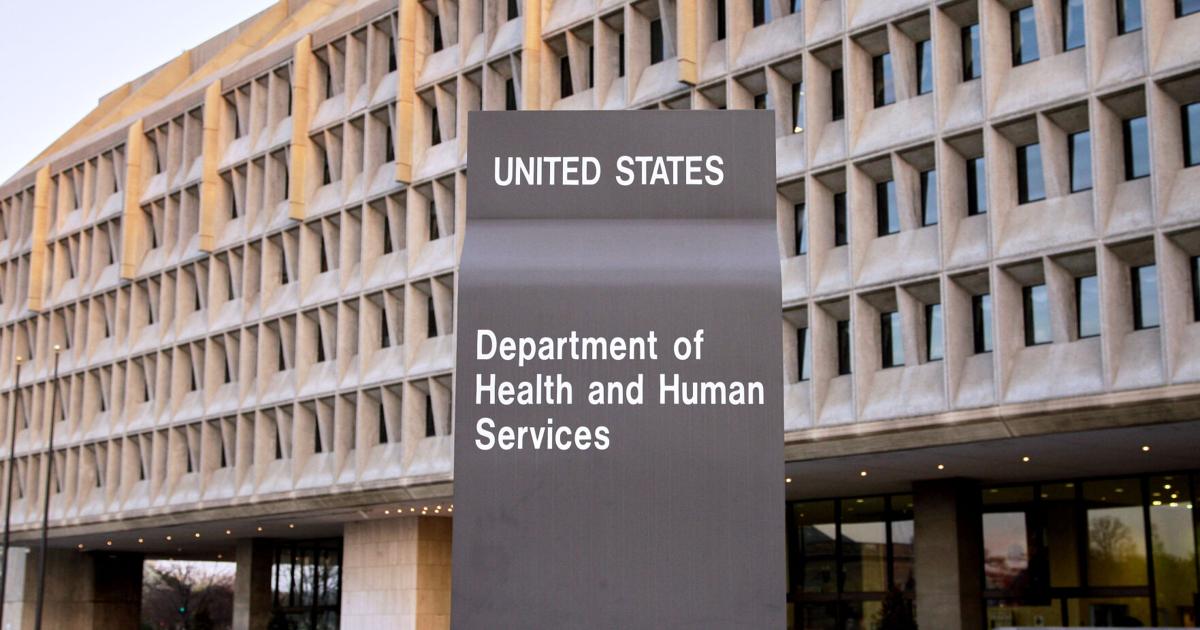
– The U.S. Department of Health and Human Services building, April 5, 2009, in Washington. (AP Photo/Alex Brandon, File)
https://www.phillytrib.com/news/health/in-a-tumultuous-year-us-health-policy-has-been-dramatically-reshaped-under-rfk-jr/article_6e9c9f01-2cb9-4c11-95c5-f2a987b0ce59.html