






China, Japan Trade Barbs Over Taiwan as ‘Ill-Mannered’ Mainland Tourists Wear Out Their Welcome on the Islands
 2025 年 11 月 18 日
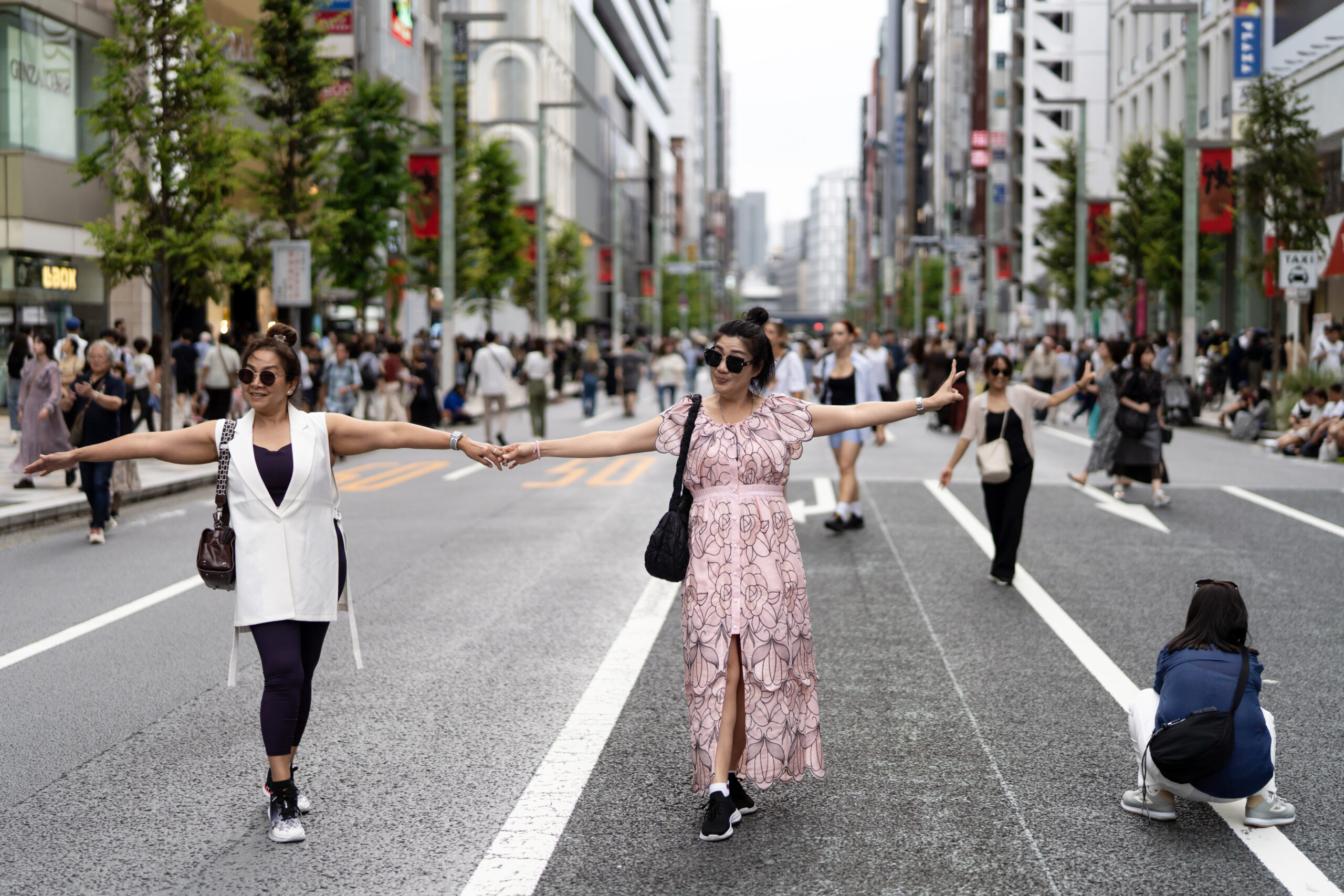
Japanese and Chinese tourists offend one another personally while Communist China engages in vituperative rhetoric over Tokyo’s worries about Beijing’s claims to Free China, the independent Chinese province of Taiwan. “The Japanese are fed up with the bad behavior of Chinese tourists,” a Japanese teacher tells The New York Sun. “They talk loudly, and they never follow the rules.” Sensitivities on both sides have burst into the news just as China responds furiously to any hint that Japanese troops might defend Taiwan against the Chinese ships and planes that regularly encircle the self-governing island democracy. ”Japan risks ‘path of no return’ if its military intervenes in Taiwan,” warns the daily newspaper of China’s People’s Liberation Daily. “The entire country,” it says, would turn “into a battlefield if it intervenes militarily in the Taiwan Strait.” Fears of “a possible Taiwan-related contingency are well known and entirely justified, especially as Beijing has been ramping up the pressure on Taiwan,” says a former senior American diplomat in Tokyo, Evans Revere. “What’s different is for those concerns to be voiced so clearly and publicly by a sitting Japanese Prime Minister” a reference to Ms. Sanai Takaichi, who got Chinese into a frenzy by remarking that a Chinese “naval blockade” around Taiwan would “constitute a survival-threatening situation for Japan.” Her remark triggered speculation that she was looking for a pretext to violate Article Nine of Japan’s “no war” constitution, which bans Japan from joining foreign wars. “I often heard strong expressions of concern about the implications of a PRC military move against Taiwan,” says Mr. Revere. “The fears are nothing new, but PM Takaichi’s explicitness about these concerns was surprising.” Inevitably, Mr. Revere believes, “the Chinese would respond with strong rhetoric.” Heightening the threat, a Chinese Navy flotilla was deployed near the Senkaku Islands, a cluster of islets and atolls held by Japan but claimed by China. While China rages against Japan, Japanese won’t have to worry about hordes of Chinese pouring through Japanese airports and into Japan’s opulent shops, restaurants and nightclubs. At the behest of Beijing, Chinese airlines are charging nothing for passengers cancelling bookings from China to Tokyo, Osaka and other Japanese cities. Japan Airlines and All-Nippon Airways are still flying to and from China, but hundreds of thousands of Chinese have asked for refunds, according to Hong Kong’s South China Morning Post. “Chinese are good customers,” says the teacher, who once provided information for visitors at one of Japan’s large international airports, but the Japanese won’t miss them. “Chinese people,”she said, “are the worst.” An American software engineer in Japan, Jay Allen, asks on the website, “Unseen Japan,” ‘Why Aren’t Japanese Restaurants Happy to Have Chinese Tourists?” Is it that “Chinese tourists to Japan are ill-mannered?” Mr. Allen cites a litany of complaints. “Chinese tourists have earned a poor reputation in Japan, even amongst those who aren’t militantly racist,” he writes. “They don’t follow the rules, they have poor morals.” The Chinese, not unexpectedly, take a different view. “Posts critical of Japan tend to spread easily on China’s online platforms, possibly contributing to the worsening impression of the country in the latest survey,” the major Japanese newspaper, Asahi Shimbun, reported. “While many Chinese tourists visiting Japan now enjoy sushi and sashimi,” a Chinese official was quoted as saying, in China many Japanese “remain hesitant and avoid eating either due to safety concerns.” “The ultimate degree of escalation still hinges on the actions of Takaichi herself,” said the strategy chief of China’s Institute of Japanese Studies, Lu Hsao. “If she further makes negative statements or takes negative actions on sensitive issues, a significant deterioration in China-Japan relations will become inevitable.” Diplomatically, Mr. Revere believes cooler heads may prevail. “Now that Beijing has vented, it would be wise for both sides to try to calm things down,” says Mr. Revere. Japan has sent an envoy to Beijing, he notes, on a mission to “help get relations back on a healthier track.” Meanwhile, he says, Ms. Takaichi’s remarks “serve as an important reminder that China’s neighbors remain deeply wary of Beijing’s growing power.” Ms. Takaichi has ignored Chinese demands that she withdraw her remark about what might happen in case of “a threat against Japan,” but she has not repeated it either. Nor has China imposed a blockade on Taiwan ports.
https://www.nysun.com/article/china-japan-trade-barbs-over-taiwan-as-ill-mannered-mainland-tourists-wear-out-their-welcome-on-the-islands