







Khanna names 6 men who he says were redacted from Epstein files for “no apparent reason”
 2026 年 2 月 10 日
Democratic Rep. Ro Khanna took to the House floor on Tuesday to read out the names of six “wealthy, powerful men” whose identities had initially been blacked out by the Justice Department in the files related to the late sex offender Jeffrey Epstein. These files, referenced by Khanna and reviewed by CBS News, have now been partially un-redacted to reveal the six names. It is important to note that the files do not appear to directly implicate these men in any crimes, and Khanna did not allege any specific criminal wrongdoing.
Khanna, a California Democrat, criticized the Justice Department for these redactions, accusing the agency of shielding the names “for no apparent reason” when it released millions of documents related to Epstein. Among the six men named by Khanna are billionaire Leslie Wexner, who led the parent company of Victoria’s Secret and had hired Epstein to manage his finances, and Sultan Ahmed bin Sulayem, CEO of Dubai-based logistics firm DP World.
The other four men Khanna named are less widely known: Salvatore Nuara, Zurab Mikeladze, Leonic Leonov, and Nicola Caputo.
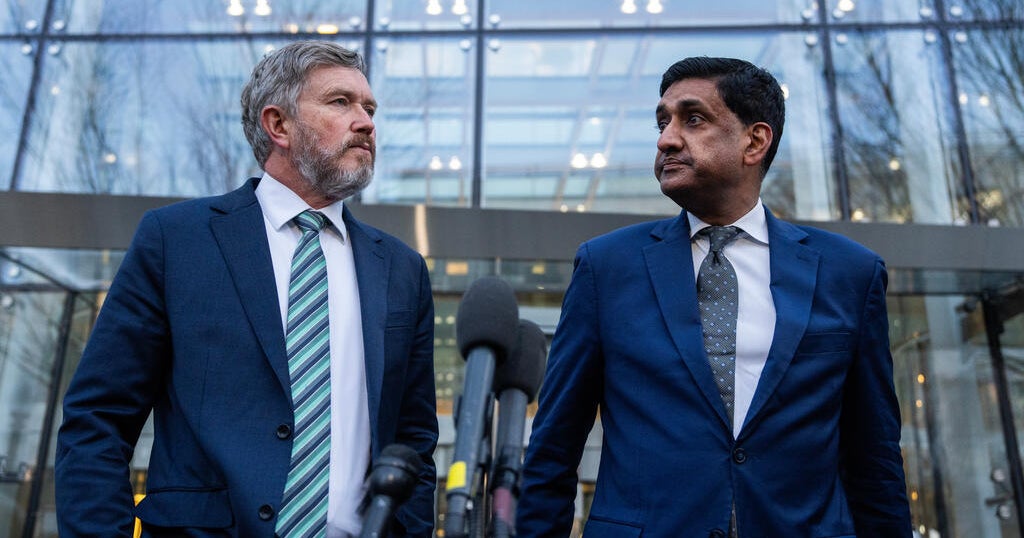
Khanna revealed that he discovered the names on Monday after visiting a Justice Department office to view unredacted versions of the Epstein files, accompanied by Republican Rep. Thomas Massie of Kentucky. The bipartisan pair co-sponsored legislation last year requiring the Justice Department to release nearly all investigative files on Epstein, with redactions permitted only to protect survivors’ identities and in a few other circumstances.
After leaving the Justice Department, Khanna and Massie told reporters they uncovered the names after spending part of the afternoon searching through documents. They suggested there are likely more individuals with redacted identities still hidden within the files.
“And if we found six men that they were hiding in two hours, imagine how many men they are covering up for in those 3 million files,” Khanna said on the House floor Tuesday.
Later Monday, after Massie pointed out a trio of documents where the six names appeared, the Justice Department partially un-redacted those files. The documents include:
– A 2019 FBI report referring to Wexner as a “co-conspirator.”
– An email correspondence between Epstein and bin Sulayem.
– A list of 20 names including the four other men, though the context or purpose of this list remains unclear and does not appear to contain allegations.
A legal representative for Wexner told CBS News that a federal prosecutor had informed Wexner’s legal counsel in 2019 that Wexner was being considered a source of information about Epstein, not a target of investigation. The representative emphasized that Wexner “cooperated fully by providing background information on Epstein and was never contacted again.” Wexner, who is referenced elsewhere in the documents, has consistently stated that he severed ties with Epstein once his crimes became public. To date, he has not been charged with any crime.
CBS News has reached out to Sultan bin Sulayem for comment and is attempting to contact the other four men.
In response to the partial un-redactions, Deputy Attorney General Todd Blanche accused Rep. Massie of “grandstanding” in a series of social media posts on Monday. Blanche asserted that the Justice Department is “hiding nothing.”
A Justice Department spokesperson defended the agency’s handling of the files, telling CBS News that with over 3.5 million pages, teams may have inadvertently redacted individuals or left some unredacted who perhaps should have been. The spokesperson added that four of the six names mentioned by Khanna appear in only one document each within the entire file set, while Wexner is mentioned nearly 200 times and Sultan bin Sulayem appears over 4,700 times.
Since the Epstein Files Transparency Act was signed into law by President Trump in November, the Justice Department has released a vast collection of records relating to Epstein and his convicted associate, Ghislaine Maxwell. These files provide details on sex trafficking investigations involving Epstein and reveal connections to powerful individuals with whom Epstein maintained ties. However, inclusion in the files does not constitute evidence of wrongdoing.
The Justice Department has faced criticism, particularly from congressional Democrats, over how it handled the redaction process. Some observers have accused the department of excessive redactions, while attorneys representing Epstein survivors contend the department failed to properly redact survivors’ names before making the files publicly available on a government database.
According to the department, hundreds of lawyers have reviewed the documents to identify survivors’ names—a monumental task given the volume of records. In some cases, files were temporarily removed to correct missed redactions.
Concerns about redactions persisted on Monday after lawmakers were permitted to view unredacted versions of the files in person. Democratic Rep. Jamie Raskin of Maryland told reporters that he saw “names of lots of people who were redacted for mysterious or baffling or inscrutable reasons.”
As the Justice Department continues reviewing the files, calls for greater transparency and accountability in handling this sensitive information remain ongoing.
https://www.cbsnews.com/news/massie-khanna-epstein-files-6-men/